First Drone Flight Fail: I Should Have Read the Instructions!
I thought I was ready. I mean, how hard could it be?
My friend Jenny had just taken her DJI Mini 2 out for her first flight. We were outside her house, and I watched as she calmly unzipped her carry case, set the drone down gently on the ground, and fired up the DJI Fly app. No drama. No panic. Just a quick tap and *whoosh* — the drone lifted off and hovered effortlessly about 10 metres above the grass.
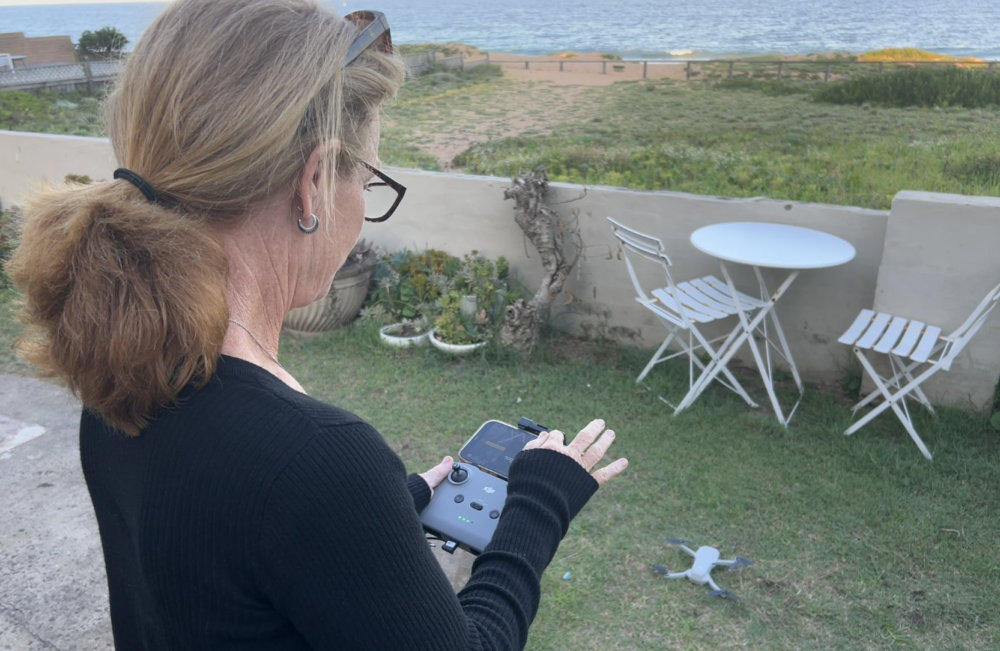
Jenny made it look so easy
She made it look so easy. No wobbles. No rushed decisions. She turned the drone slowly, did a few gentle movements back and forth, and then brought it down for a soft landing – all with this relaxed confidence that said, “I’ve got this.” I snapped a few photos of her mid-flight, standing with the controller in her hands, sunglasses on, breeze in her hair — cool as anything.
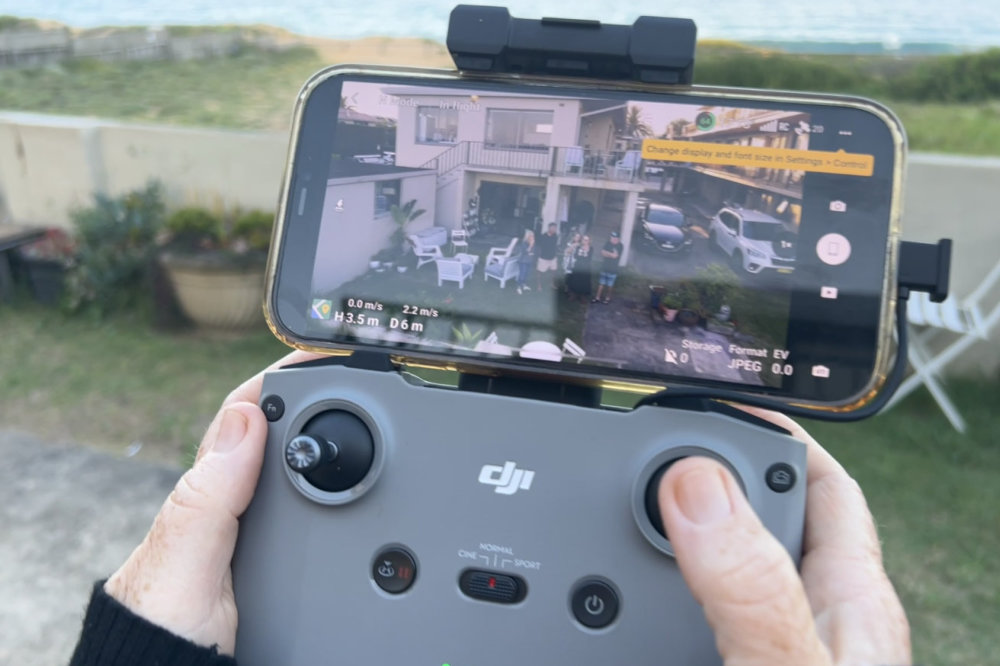
Jenny’s drone hovering above looking back at us
That was all the motivation I needed. If Jenny could do it, so could I. Right? I mean, it’s not like flying a drone was rocket science. Spoiler: I was wrong.
The (Un)Prepared Takeoff
I did what any overly enthusiastic, instruction-skipping adrenaline junkie would do: I rushed straight to the shop and bought myself a DJI Mini 2 SE.
I barely made it through the door before I was tearing open the box like a kid on Christmas morning. I popped the battery on charge — not all the way, mind you, just “enough.” I named my drone Snoopy, tweaked a few settings (which, let’s be honest, I had no business touching yet), and then sprinted back out the door, beach-bound for my first solo flight.
The launchpad? A towel in the sand.
The mindset? Excited. Cocky. Totally unprepared.
The checklist? Nonexistent.
I powered Snoopy up and sent him into the air. He rose beautifully. I was immediately hooked. “Wow, I’m actually doing it!” I thought. I climbed to 60 metres and drifted him gently over the ocean like a professional aerial cinematographer.
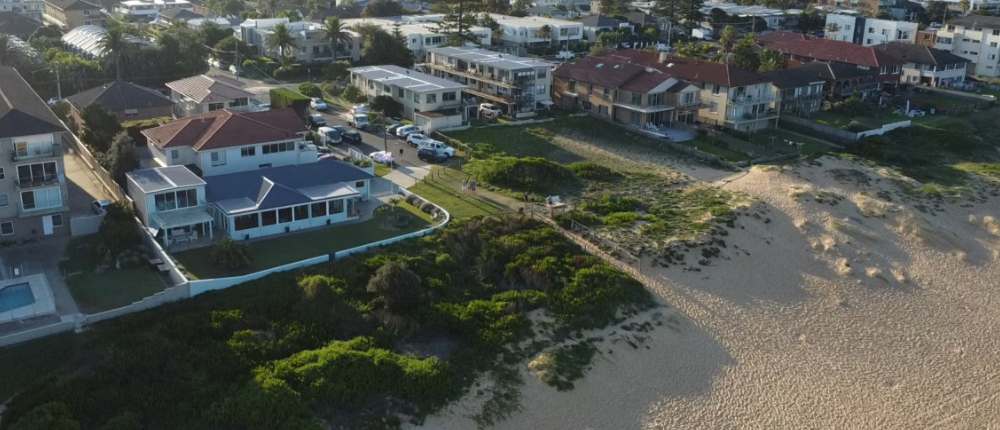
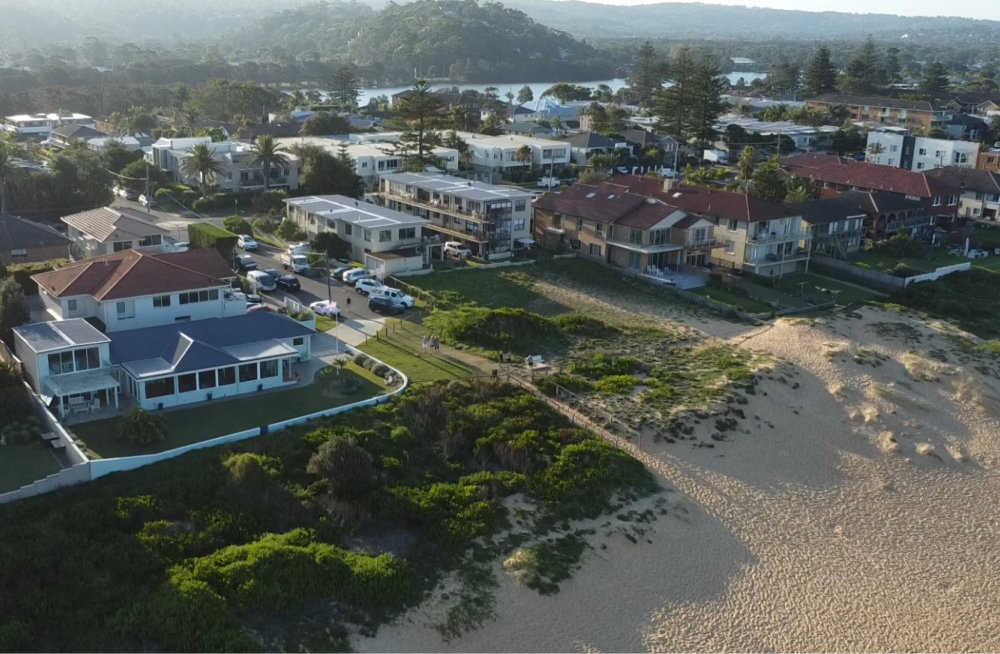
As I watched the screen on my phone, I was mesmerised by what Snoopy was seeing. The crashing waves below, the rooftops of beachside homes, a puppy chasing seagulls on the sand, birds swooping through the air, and even a few kite surfers dancing with the wind – it felt like I was seeing the world for the first time. I was completely lost in the moment, flying high and free, totally unaware that trouble was just a few minutes away.

I was blown away by what I was seeing
The Panic Sets In
Five minutes in, things got … intense.
The screen started flashing: LOW BATTERY.
The drone began to climb higher.
A warning started beeping.
My heart followed suit.
And then I saw it: a message flashing on the screen, giving me the option to cancel Return to Home. Cancel? Why would I cancel that?! What did that even mean? My fingers froze. I had no idea what to press, what would happen, or if pressing anything would make it worse.
I stood there, heart pounding, completely convinced that Snoopy was about to become an expensive seabird snack.
A Buzz, A Miracle, A Hard Lesson
Then, just when I’d mentally written off my $500 investment and started mourning my short-lived drone career, I heard a faint buzzing.
I looked up. And there was Snoopy. Descending calmly. Coming home. Landing like an old pro.
I could have hugged him. I might’ve cried a little.
Snoopy coming home
Lessons Learned (The Hard Way)
After my near-miss flight, I went home and — finally — opened the manual. I discovered I’d unknowingly set the Return to Home (RTH) altitude to 120 metres, which is why the drone had climbed before returning. It wasn’t malfunctioning. It was doing exactly what I told it to do — I just didn’t understand the command. That flight could have ended very differently, but luckily, I got a second chance (and so did Snoopy).
Since then, I’ve made it my mission to fly smarter. I now check my RTH settings before every launch, charge everything fully, and fly within my limits. I even practice new manoeuvres in wide-open areas before attempting anything cinematic. That day at the beach reminded me that enthusiasm is great — but preparation is better. It’s not just about flying; it’s about understanding what your drone is doing, and why.
What I Wish I Knew
Fully Charge Everything
Before your first flight, excitement takes over — but skipping a full battery charge is asking for mid-air panic. In my case, I thought “half a charge will do” because I just wanted to get airborne. But the truth is, a partially charged battery doesn’t give your drone the safety margin it needs to fly smart and return home with time to spare. Low battery warnings come quickly, and return-to-home procedures can fail if your drone runs out of power mid-flight.
Charging your phone, controller, and any backup batteries is just as important. Your controller dropping out, or your phone screen going black because it’s on 8%, turns a casual flight into a scramble to guess where your drone has gone. Don’t cut corners. Give yourself — and your drone — the power to succeed.
Understand Return-to-Home Settings
I had no idea what the Return-to-Home (RTH) altitude was or why it mattered until my drone started climbing to 120 metres during a low battery emergency. I thought it was glitching. I thought I’d lost control. But in reality, the drone was doing exactly what I had unknowingly told it to do — climb high to avoid obstacles before flying back. It was trying to save itself while I was panicking because I didn’t understand the basics.
Once I read the manual, it all made sense. If your RTH altitude is too low, your drone could crash into trees or buildings on the way back. If it’s unnecessarily high, it might burn too much battery getting up there and never make it home. Set a realistic RTH altitude for your environment — 30 to 50 metres is safe in most open areas. And always make sure your drone has acquired a solid GPS lock and has marked the correct home point before takeoff.
Don’t Launch From Sand or Towels
I thought launching from a beach towel was creative. Turns out it was careless. Sand is one of the worst things for your drone’s motors, gimbal, and camera lens. Even a light gust of wind during takeoff can blow grains of sand into the propeller joints, potentially damaging the hardware before you even get into the air. Towels, being soft and uneven, also risk making your drone tip over on launch or landing.
Use a landing pad, hard case lid, or even the roof of your car — anything flat, stable, and elevated off dirt or sand. If you’re regularly flying from beaches or fields, a collapsible landing pad is one of the best $20 investments you can make. Your drone (and its sensors) will thank you.
Don’t Mess With Settings You Don’t Understand
Curiosity is a great trait — unless it’s happening in the settings menu of your drone before your first flight. I tweaked a few options without knowing what they did, and one of those settings turned out to be RTH altitude. Harmless? Nope. That small change triggered a completely unexpected mid-flight behaviour that almost cost me the drone.
Before you touch anything, learn what it controls and what effect it has. Watch tutorial videos, read the manual (yes, really), and do a test flight with the default settings. DJI — and most drone brands — design their default settings to protect beginners from themselves. Only customise once you know enough to do it with confidence and purpose.
Read the Manual Before, Not After, You Fly
Let’s be honest — very few of us enjoy reading manuals. I thought watching a few YouTube videos and “just figuring it out” would be faster. Instead, I spent the most stressful five minutes of my life watching my drone fly higher and further than I ever intended, because I skipped the most basic instructions.
Reading the manual first gives you power. It explains what the buttons do, what the warnings mean, how to avoid flyaways, and how to respond when things go wrong. A quick read could have spared me a full-blown panic, and possibly $500. Now I read the manual before I fly anything new. It turns out, confidence comes from knowing what to expect — and what your drone is trying to tell you.
Related Articles That Would Have Saved Me
- Setting Up Your Drone: A Step-by-Step First Flight Checklist
- Beginner Drone Flying Tips
- Drone Battery Tips
Final Thoughts
Snoopy’s first flight could have been his last — but somehow, despite my “best efforts”, he came back. And I came back smarter. Drones are amazing tools, but they’re not toys. Treat them with respect, and they’ll reward you with incredible footage, unforgettable moments, and the occasional heart-stopping lesson.
Take it from me: read the instructions first. Your drone (and your stress levels) will thank you.
 ***
***
Ivana Katz is a Sydney based website designer and travel blogger. Having her own business has given her the freedom to explore the world. She believes travel is the best teacher and her passion for adventure, writing and photography has taken her and her son to some amazing places, including Hawaii, Canada, Fiji, Greece and Czech Republic. Ivana’s favourite thing about travelling is learning, discovering hidden gems and creating memories. She loves nothing more than inspiring other women to chase their dreams and explore the world with their families and friends.