Best Places in Australia for Caravanners Who Fly Drones
If you have ever pulled into a caravan park at golden hour, looked at the coastline or the red dirt stretching out around you and thought ‘I wish I could see this from above’, you are not alone. Drones have become one of the most popular accessories in the modern caravanner’s kit, and it is easy to understand why. Australia’s landscapes are made for aerial photography. Turquoise water against white sand, red gorges cutting through the outback, morning mist rolling over vineyard valleys. From 120 metres up, this country looks absolutely incredible.
The good news is that recreational drone flying in Australia is legal, does not require a licence, and is governed by a straightforward set of rules. The not so good news is that where you can and cannot fly is more complicated than most people realise, especially when national parks, controlled airspace, wildlife protections and local council rules all come into play.
This guide is written specifically for Australian caravanners who travel with a drone. It covers the CASA rules you need to know (always check the relevant safety authority for updated rules & regulations), the national park restrictions that catch people out, and most importantly, the best drone friendly destinations around Australia where you can get incredible footage without breaking any laws. Whether you are flying a DJI Mini for fun or producing content for your YouTube channel, this is your planning resource.
The Drone Rules Every Caravanner Needs to Know
Before we get to the destinations, let’s cover the basics. The Civil Aviation Safety Authority (CASA) sets the national drone safety rules that apply everywhere in Australia. If you are flying recreationally (for fun, not for paid work), the rules are relatively simple:
Maximum altitude: 120 metres (400 feet) above ground level.
Visual line of sight: You must be able to see your drone with your own eyes at all times. Not through a screen, not through goggles, with your actual eyes.
Distance from people: Keep your drone at least 30 metres away from anyone who is not directly involved in the flight.
No flying over people: Never fly directly over crowds, beaches with people on them, sporting events or busy public areas.
Daylight only: Recreational flying is limited to daylight hours.
One drone at a time: You can only operate one drone at a time.
Controlled airports: If your drone weighs more than 250 grams, you must not fly within 5.5 kilometres of a controlled airport (one with a control tower). Drones under 250 grams can fly up to 45 metres high within this zone but must stay outside the airport boundary.
No licence required: Recreational flyers do not need a licence, registration or accreditation.
Wildlife: You must not fly within 300 metres of whales or dolphins (500 metres in Queensland waters). Avoid flying near nesting birds or disturbing any wildlife.
Before every flight, download a CASA verified drone safety app like OpenSky to check whether you are in restricted airspace. It takes 30 seconds and can save you a fine of up to $1,650 per offence (or up to $16,500 if the matter goes to court).
The Big One: National Parks and Drones
This is where most caravanners get caught out. Australia’s national parks contain some of the most spectacular scenery on the planet, but in almost every state, flying a drone in a national park is either banned outright or requires a permit that can be difficult to obtain for recreational purposes.
Here is a state by state summary of the rules as they currently stand:
New South Wales: Drones are prohibited in all national parks and reserves managed by NSW National Parks and Wildlife Service unless you have obtained specific written approval. Fines of up to $3,300 apply.
Victoria: Parks Victoria does not permit recreational drone use within its managed parks and reserves. However, if you launch and land your drone from outside the park boundary, do not disturb wildlife, and comply with all CASA rules, this may not breach the specific launch/land regulation. Check with Parks Victoria before flying.
Queensland: Drones under 2 kilograms can be used in some Queensland national parks for recreational purposes without a permit, provided there are fewer than 10 people involved and you are not filming buildings or structures. However, drones are completely banned in camping areas in all protected areas, and several parks have specific drone restriction zones (such as Lake McKenzie on K’gari). Always check the specific park’s rules.
South Australia: It is an offence to fly drones in SA’s national parks, conservation parks, game reserves and recreation parks without a permit. Permits are generally only considered for scientific research and commercial filming.
Western Australia: WA allows recreational drone use in national parks and conservation reserves provided you follow five specific rules set by the Department of Biodiversity, Conservation and Attractions. These are generally aligned with CASA rules but include additional requirements around wildlife and other visitors. Check the Explore Parks WA website for current details.
Tasmania: Drones are not permitted on reserved land unless you have specific written authority from the Tasmania Parks and Wildlife Service. This is particularly strict in World Heritage wilderness areas.
Northern Territory: A permit is required to fly a drone in any NT park or reserve. Drones are heavily restricted or banned in iconic sites like Kakadu and Uluru-Kata Tjuta National Park. Many areas also require consultation with traditional owners.
ACT: Recreational drones are not allowed in ACT nature reserves. The National Capital Authority restricts drone use around Parliament House, embassies and other government precincts.
The bottom line: never assume you can fly in a national park. Always check the specific park’s website or contact the managing authority before you launch. The best drone footage as a caravanner often comes from beaches, coastlines, rivers, farmland and outback areas that sit outside the national park system entirely.
For the official state and territory rules, see Drones.gov.au.
The Best 7 Drone Friendly Destinations for Caravanners
With the rules covered, here are the destinations that combine spectacular drone flying with great caravan infrastructure. These locations are chosen specifically because they offer large, open, uncrowded areas where recreational drone flying is legal and practical, with caravan parks or camping nearby.
1. Esperance and the Great Ocean Drive, Western Australia
Esperance is a drone pilot’s paradise. The 40 kilometre Great Ocean Drive loop takes you past some of the most photogenic coastline in Australia, with granite cliffs, snow white sand and water so turquoise it almost looks unreal. Twilight Beach, with its smooth granite boulders just metres from shore, is particularly stunning from the air. The beaches are vast, uncrowded and outside national park boundaries, which means recreational drone flying is generally straightforward provided you follow CASA rules and keep away from people.
Lucky Bay, while part of Cape Le Grand National Park (check WA park drone rules before flying), is famous for its kangaroos on white sand. Even if you cannot fly inside the park, the surrounding coastline outside the boundary offers equally dramatic footage.
Caravan parks: Esperance Bay Holiday Park, BIG4 Esperance Holiday Park, Lucky Bay Campground (national park, basic facilities).
Best for: Coastal aerials, turquoise water contrasts, granite formations, wide open beaches with no crowds.
2. Great Ocean Road, Victoria
The Great Ocean Road is one of Australia’s most spectacular coastal drives and a classic caravanning route. The dramatic cliff faces, sea stacks and rock formations (including the Twelve Apostles) are extraordinary from the air. Flying in the national park areas around the Twelve Apostles requires a Parks Victoria permit, but there are plenty of stunning coastal vantage points along the road that sit outside park managed land where recreational flying is possible.
Sections around Loch Ard Gorge, the Gibson Steps, and the coastal areas between the small towns are worth scouting. If you launch from outside the park boundary, ensure you do not disturb wildlife and comply with all CASA rules. The cliff faces along this stretch of coast rise well above sea level, so be mindful of the altitude overlap with general aviation aircraft using the coastal VFR routes.
Caravan parks: BIG4 Beacon Resort Queenscliff, Torquay Foreshore Caravan Park, Port Campbell Holiday Park, BIG4 Apollo Bay Pisces.
Best for: Sea stacks, dramatic cliffs, coastal rock formations, sunrise and sunset coastline shots.
3. Coral Bay and Ningaloo Reef, Western Australia
Coral Bay is one of the few places in Australia where you can capture coral reef from shore with a drone. The Ningaloo Reef sits just metres offshore, and the water is so clear that the coral formations, manta rays, turtles and reef sharks are visible from altitude. The beaches around Coral Bay are wide, uncrowded and outside controlled airspace, making it an ideal location for recreational drone pilots.
The town is small and remote, which means fewer people and fewer restrictions. Keep your distance from marine wildlife (300 metres minimum from whales and dolphins) and avoid flying directly over swimmers or snorkellers. The best footage comes from early morning when the water is at its clearest and the angle of light reveals the reef structure beneath the surface.
Caravan parks: Peoples Park Coral Bay, Bayview Coral Bay. Book well in advance during peak season (April to October).
Best for: Reef from above, turquoise lagoons, marine wildlife (from legal distance), remote coastline.
4. Outback Queensland (Longreach, Winton, Copperfield Gorge)
If you want to fly your drone with virtually nobody around for kilometres, outback Queensland is the answer. The vast, flat landscapes of red earth, spinifex and endless horizons produce incredibly cinematic footage that is unlike anything you will get on the coast. Towns like Longreach, Winton and Barcaldine sit well outside controlled airspace, and the low population density means finding a safe, legal launch site is easy. Just make sure to plan to have all caravanning gear your need and know how to keep your caravan cool when visiting remote towns and locations in hot months.
Copperfield Gorge near Einasleigh is a hidden gem for drone pilots, particularly after the wet season when the gorge fills with fresh water. The surrounding savannah is stunning from altitude. The Dinosaur Trail between Winton and Richmond offers unique red earth landscapes. Just watch out for eagles and other large birds of prey that share the outback skies.
Caravan parks: Longreach Tourist Park, Winton Outback Motel and Caravan Park, Einasleigh Riverside Caravan Park.
Best for: Red earth panoramas, gorges, endless horizons, astrophotography setup, zero crowd interference.
5. Gibb River Road and the Kimberley, Western Australia
The Kimberley is bucket list territory for Australian caravanners, and the aerial footage opportunities along the Gibb River Road are extraordinary. Ancient gorges, waterfalls, boab trees and the distinctive red Kimberley landscape create some of the most dramatic drone content you will ever capture. Most of the Gibb River Road sits outside national park boundaries, though some popular stops like El Questro and Windjana Gorge are managed areas where you should check before flying.
The remoteness of the Kimberley means you are unlikely to encounter controlled airspace or large numbers of people. However, be aware that some stations and pastoral properties have helicopter operations (for mustering), so listen and look before launching. The dry season (May to October) is the only practical time to travel the Gibb River Road with a caravan.
Caravan parks: El Questro Station, Home Valley Station, Imintji Campground, Manning Gorge Campground. Note: many are basic bush camping with limited facilities.
Best for: Ancient gorges, waterfalls, boab trees, red cliff faces, untouched wilderness, sunset panoramas.
6. South Coast NSW (Jervis Bay to Merimbula)
The NSW South Coast is one of the most popular caravanning corridors in the country, and for drone pilots it offers a fantastic mix of white sand beaches, clear water, coastal headlands and forested hinterland. The key advantage here is that there are many beautiful beaches that sit outside national park boundaries, giving you legal flying areas with spectacular scenery.
Jervis Bay (outside the national park sections), Mollymook, Narooma and Merimbula all have stunning coastline that is accessible and relatively uncrowded outside school holidays. Narooma’s famous ocean rock formations (including the heart shaped rock visible from the air) are well known in the drone photography community. The beaches at Hyams Bay are surrounded by bushland, and the contrast of white sand and deep blue water is extraordinary from altitude.
Caravan parks: BIG4 Easts Beach Holiday Park (Kiama), Shoalhaven Heads Holiday Haven, NRMA Merimbula Beach Holiday Resort, BIG4 Narooma Easts Holiday Park.
Best for: White sand and turquoise water contrasts, coastal headlands, rock formations, quiet beaches.
7. Kati Thanda (Lake Eyre), South Australia
When Kati Thanda fills with water (which happens irregularly, often years apart), it becomes one of the most visually spectacular drone destinations on Earth. The vast salt lake stretches across nearly 10,000 square kilometres of outback South Australia, and the interplay of white salt, pink and blue water, and red desert is unlike anything else in the country. Even when dry, the salt pan patterns and textures are mesmerising from above.
The lake itself is not within a national park (the Kati Thanda/Lake Eyre National Park covers parts of it, so check before flying in those sections), but the surrounding areas of the Oodnadatta Track and William Creek offer incredible drone opportunities well away from any controlled airspace. William Creek is one of the smallest towns in Australia and has a basic campsite, making it a genuine outback caravanning adventure.
Caravan parks: William Creek Campground (basic, no power), Coober Pedy caravan parks (about 3 hours south), Marree Caravan Park.
Best for: Salt lake patterns, vast outback scale, abstract aerial compositions, once in a lifetime water filling events.
Tips for Getting the Best Footage on the Road
The best caravanning drone pilots plan their shots around conditions rather than convenience. Here are some practical tips that will improve your results:
Fly at golden hour: The first and last hour of daylight produce the warmest, most dramatic light. In the outback, the red earth glows at sunrise and sunset. On the coast, long shadows and warm tones transform beaches.
Check the wind: Early morning is almost always calmer than afternoon, especially on the coast where sea breezes pick up from late morning. Plan your flights for dawn or the last hour before sunset.
Scout before you fly: Walk the area first. Identify power lines, trees, birds of prey nests, other people and any potential hazards. A two minute walk can save a crashed drone.
Respect other campers: Not everyone wants to hear a drone buzzing overhead while they are having their morning coffee. Fly away from occupied campsites and caravan parks, not over them. Common courtesy goes a long way.
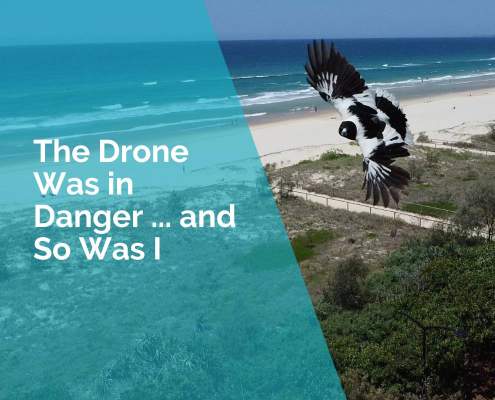
Avoid wildlife: Eagles, hawks and magpies will attack drones. If you see large birds in the area, wait until they move on or choose a different location. Never deliberately fly near nesting birds or marine animals.
Know your return to home settings: Before every flight, check your drone’s return to home altitude and GPS accuracy. In unfamiliar locations, set RTH altitude higher than any nearby trees or structures.
Back up your footage: Carry a portable hard drive or laptop and back up your footage every evening. Memory cards can corrupt, and you do not want to lose once in a lifetime shots because of a single card failure.
Final Thoughts
Australia is one of the best countries in the world for drone photography, and caravanning is one of the best ways to access the locations that produce truly stunning footage. The combination of vast, uncrowded landscapes, incredible natural beauty and the freedom to move at your own pace makes drone flying and caravanning a perfect match.
The key to getting it right is preparation. Know the CASA rules, check the national park restrictions for every location you plan to visit, download a drone safety app, and always respect other people, wildlife and the environment. The best drone footage comes from thoughtful planning, not from pushing boundaries.
Pack your caravan accessories, charge up the van, and start planning your route. There is no shortage of jaw dropping footage waiting for you out there.
***
CP
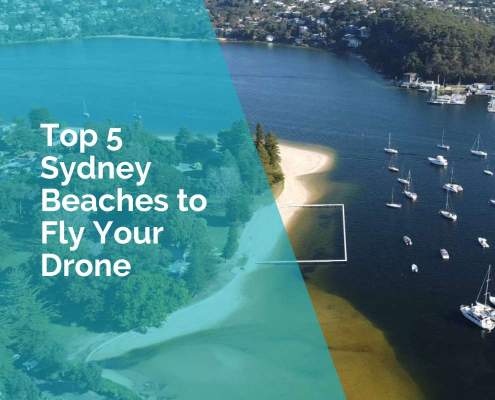
Want to Know Exactly Where to Fly in Sydney?
If you’re tired of Googling “where can I fly my drone?” and just want clear, beginner-friendly advice — I’ve got you.
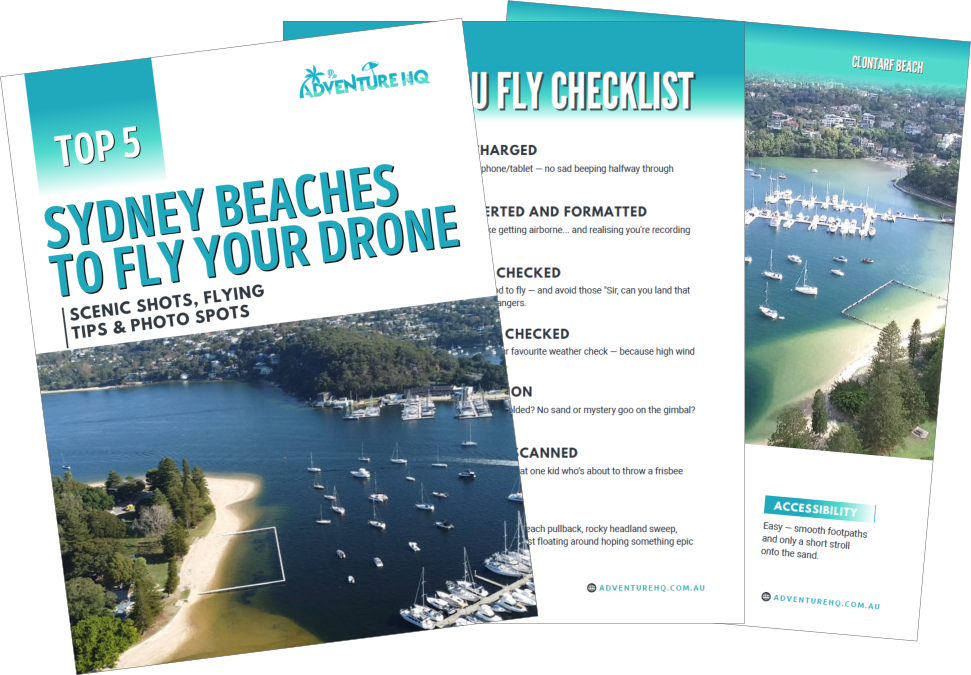
I created a printable Sydney Drone Beaches Guide that includes:
- 5 legal, beginner-approved beaches
- GPS pins for takeoff points
- Tips on when to fly and what to shoot
- Real drone photos and layout previews
It’s based on lived experience – not just a map.